Project
ClearCo Brand Transformation
Client
ClearCo (formerly ClearCompany)
Service
Brand Transformation / Creative Direction
The situation
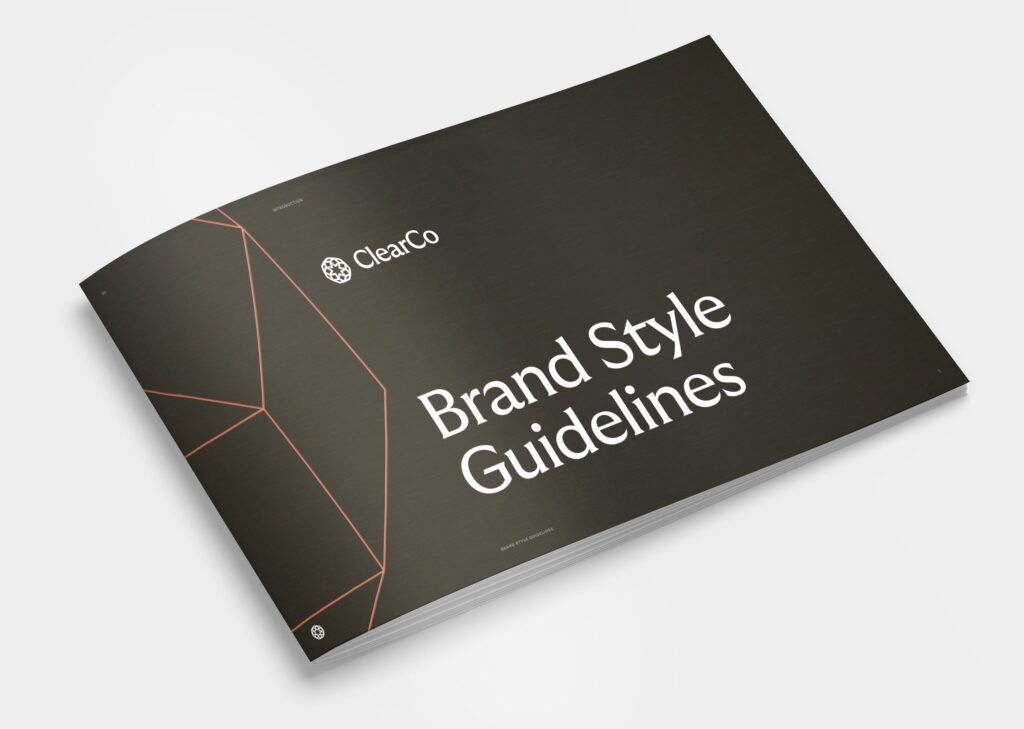
ClearCompany was moving upmarket and investing heavily in AI — but the brand wasn't keeping pace. The name felt mid-market. The visual identity lacked the credibility to compete against Workday, Cornerstone, and a wave of AI-first entrants. I led the complete transformation: new name, new identity, new voice. The brand launched publicly at Transform in Las Vegas, to strong industry response.








The situation
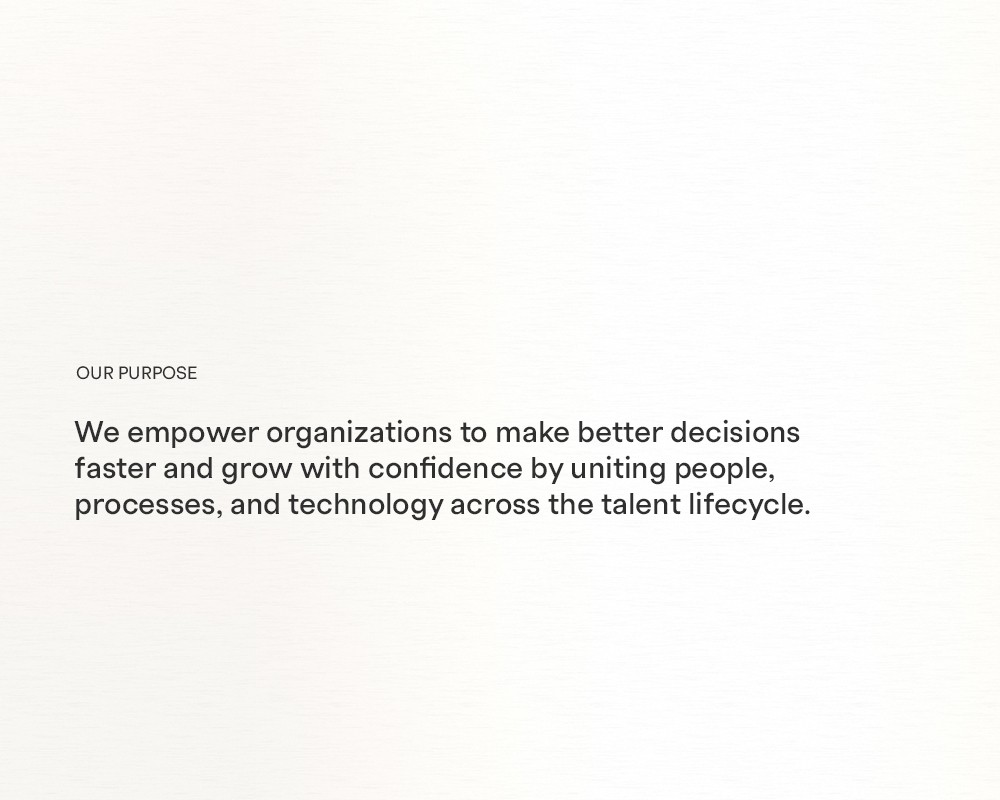
ClearCompany was at an inflection point. The company was expanding beyond the mid-market, accelerating its AI capabilities, and competing in a category dominated by platform giants — Workday, Cornerstone, ADP, UKG — as well as a new wave of AI-first entrants disrupting from below. The brand wasn't built for that fight. The name read as mid-market. The identity lacked the visual and verbal sophistication to signal credibility to a more demanding buyer. And the story — specifically the AI story — wasn't cutting through. The CMO came in with a mandate to change that. The brief was ambitious: reposition the company, rename it, build a brand identity system from the ground up, launch a new website, and do it all in a way that energized internal teams as much as it impressed external ones.
The Friction
The brand wasn't just visually dated — it was strategically misaligned. ClearCompany's actual strengths — a unified talent management platform connecting hiring, onboarding, learning, and performance; deep domain expertise; and a genuine AI development roadmap — weren't legible in the brand. The visual system felt generic. The voice was flat. And the name itself, with "Company" in it, inadvertently positioned the product as the tool, not the partner. The real question wasn't what should the brand look like. It was: what does ClearCo actually stand for, and how do we build a system capable of expressing that to a buyer who has been burned by overpromised platforms before?
The Approach
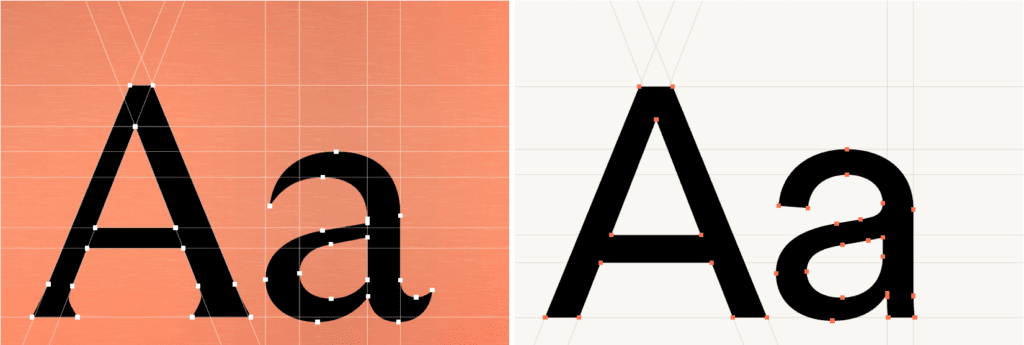
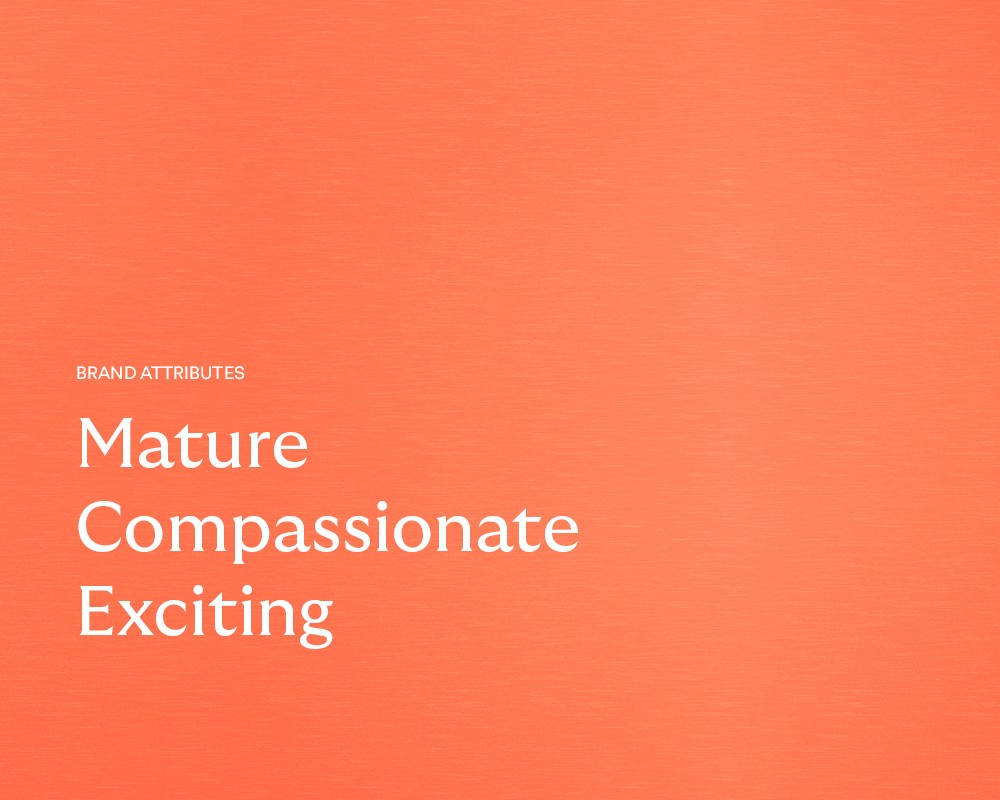
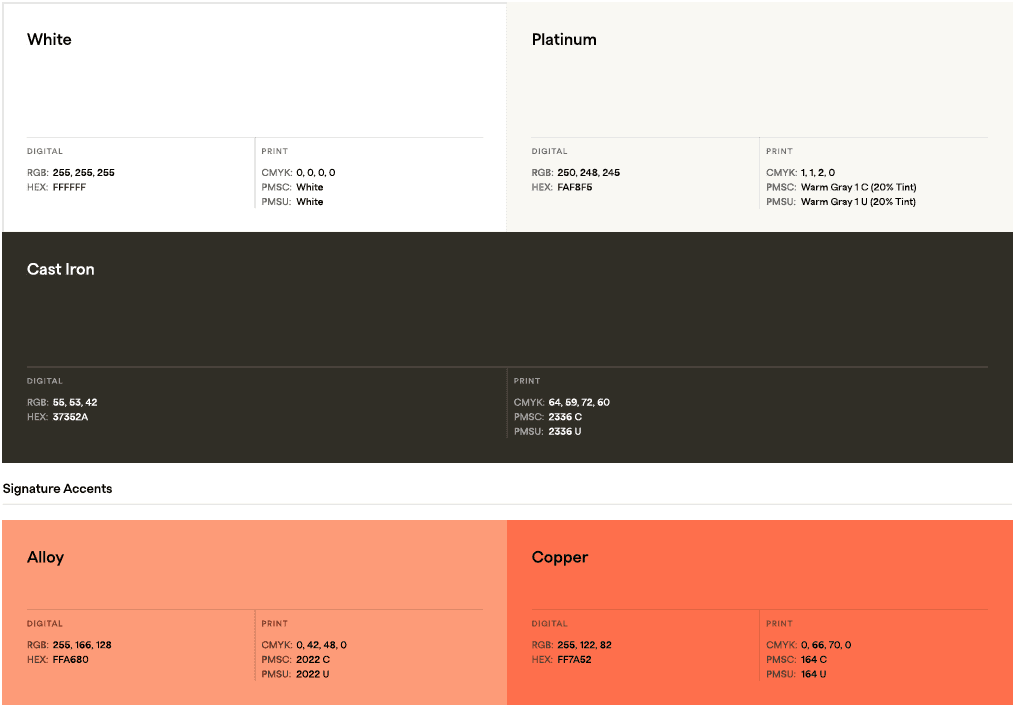
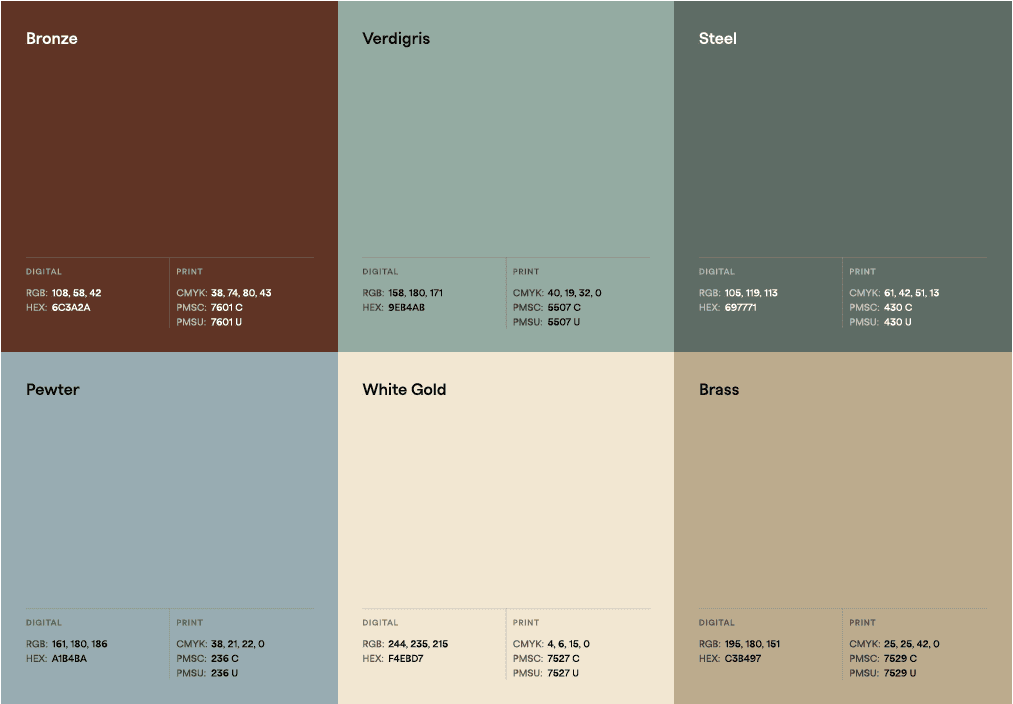
I led the brand transformation end to end — discovery, strategy, naming, identity, voice, and rollout — working alongside the internal marketing team and coordinating with external agency partners. The discovery process surfaced a clear strategic truth: ClearCo's differentiation wasn't just the platform. It was the clarity the platform provided — visibility into the entire workforce, the confidence to act on it. That became the organizing idea: clarity as a superpower. From that foundation we built the complete system. The name moved from ClearCompany to ClearCo — tighter, more confident, more enterprise-ready. The visual identity shifted to a sophisticated metallic palette anchored by Cast Iron and Copper, with GT Ultra Median as the headline typeface — a deliberate step away from the generic SaaS aesthetic toward something premium and considered. The iconography system gave the brand flexibility across utility and marketing contexts. The voice — welcoming but purposeful, empowering but grounded — was calibrated to speak to pragmatic HR leaders without condescending to them. Every element was designed to say: this is a company that has grown up.
The Outcome
The brand launched publicly at Transform in Las Vegas — one of the HR industry's most prominent annual events — and the response was strong. Internal teams, who had been brought into the process throughout, responded with the kind of buy-in that doesn't happen when a brand is handed down from above. The CMO extended the engagement. Hard metrics are still early. But the signal that matters most right now is organizational: a company that went into this process uncertain about who it was, and came out with a brand it believes in.
The Execution
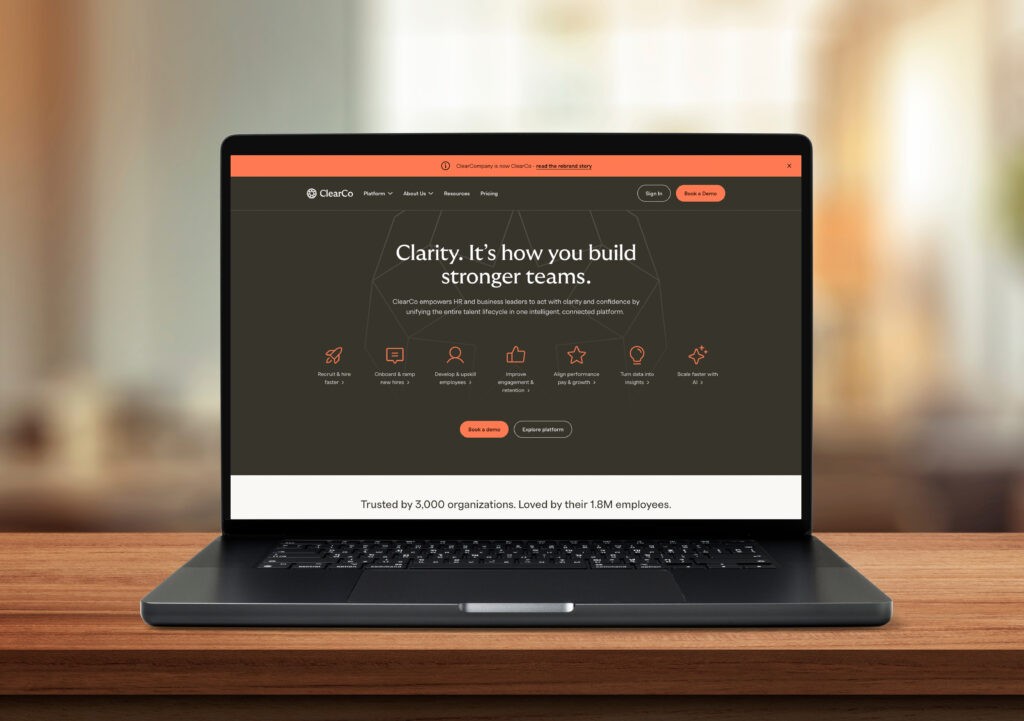
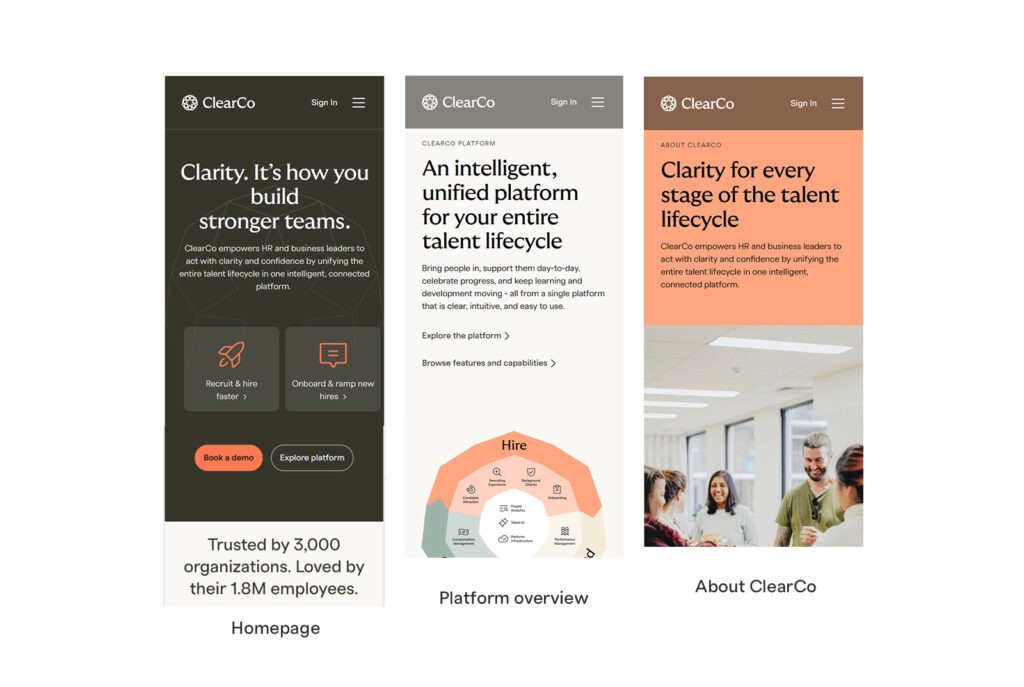
A brand system is only as good as what gets built from it. The ClearCo identity launched not as a style guide but as a functioning ecosystem — website, video, digital advertising, and collateral all expressed through the same strategic foundation. The website homepage carried the core brand idea into the product experience — clarity as a competitive advantage, made visible in the architecture and hierarchy of every screen. Wireframes established the structural logic before design touched it, ensuring the story led the layout rather than the other way around. The brand video gave the transformation a narrative arc — something internal teams could rally behind and external audiences could feel before they understood it. It made the rebrand an event, not just an announcement. Social advertising brought the new identity into the performance channel, tested in-device to ensure the system held up at the scale and context where buyers actually encounter it. The collateral suite completed the picture — extending the identity into the physical and sales environments where credibility gets tested in rooms, not browsers. The result was a brand that didn’t just look different. It behaved differently across every surface it touched.


Related projects

Sage Global Rebrand

AVEVA Brand Refresh
" width="254px"><path d="M 254 130.491 L 159.432 143.691 L 205.845 202.422 L 201.627 206.626 L 143.125 160.037 L 129.983 255 L 124.017 255 L 110.875 160.037 L 52.373 206.626 L 48.185 202.422 L 94.593 143.691 L 0 130.491 L 0 124.509 L 94.593 111.315 L 48.185 52.584 L 52.373 48.349 L 110.875 94.938 L 124.017 0 L 129.983 0 L 143.125 94.938 L 201.627 48.349 L 205.845 52.584 L 159.432 111.315 L 254 124.509 Z" fill="rgb(232, 47, 43)" height="255px" id="EvCmx7UP9" width="254px"/></g></svg>)
