THE PROBLEM
BRAND IS NEVER THE PROBLEM.
UNTIL IT IS.
You track runway, multiples, and team. Brand rarely makes the board deck — until a founder can’t close a “sure thing” round or a sales cycle mysteriously doubles. By then the damage is done.
A misaligned position is a silent drag on your capital. It shows up as a pitch that doesn't land, a category narrative owned by a competitor, or a team that can't explain what they do. You don’t see it coming; you just see the results.
Don’t look at the dashboard and ignore the engine light.
THE CONNECTION
When a company’s story doesn’t scale with its product, the capital behind it works harder for less:
Buyers can't articulate why they’re choosing this company over the competition. Deals stall, or they’re won solely on price.
Investors can't see the category leader potential. Rounds take longer to close and valuations take a hit because the narrative feels small.
The best people want to join a mission, not a feature set. Without a compelling brand narrative, you lose the recruiting wars for top talent.
None of these look like brand problems on the dashboard, but they’re almost always the root cause.
IS NARRATIVE DRAG COMPRESSING YOUR PORTFOLIO’S VALUATION?
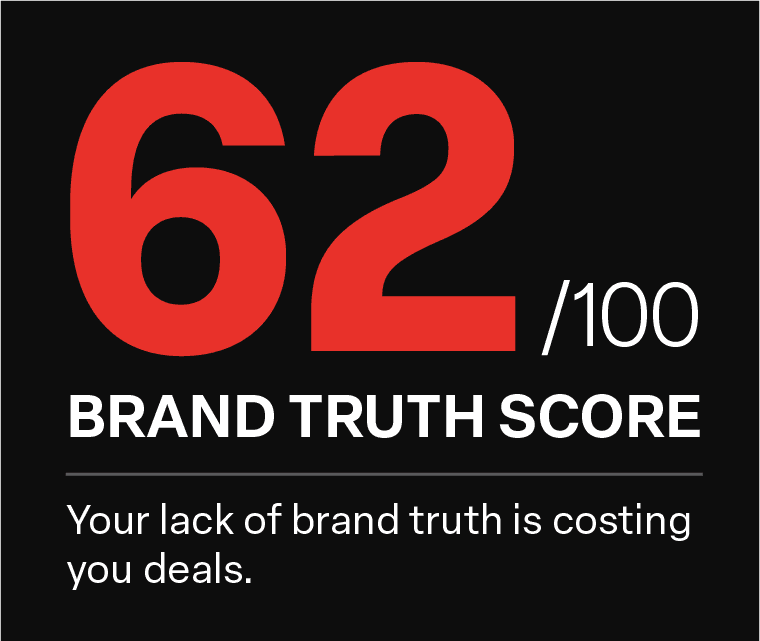
Capital shouldn't fund an explanation problem. Take the 60-second Brand Drag Assessment to run a cold, objective calibration on whether a portfolio company's market position is preserving valuation or actively draining runway.
THE SOLUTION
The Brand Truth Assessment is an independent, practitioner-led evaluation of where a portfolio company actually stands — what it's communicating, how it stacks up against the competition, and exactly what needs to change. It's not a rebrand. It's a diagnosis. It tells you whether the problem is fixable with a tune-up, or whether a full rebuild is the only path forward.
The Outcome:
The Reality Gap: A clear picture of what the brand is communicating, versus what you think it is.
The Whitespace Map: An honest, competitive analysis to find where your competitors are claiming territory, and where there's whitespace to own.
The Priority Roadmap: A set of actionable recommendations to close narrative and positioning gaps.
Delivered directly to you or the portfolio company’s leadership. No junior analysts. No offshore research. Just the truth.
WHAT IT LOOKS LIKE
EVERY PAGE EARNS ITS PLACE
Following are three pages from a real assessment. All identifying information is fictionalized.
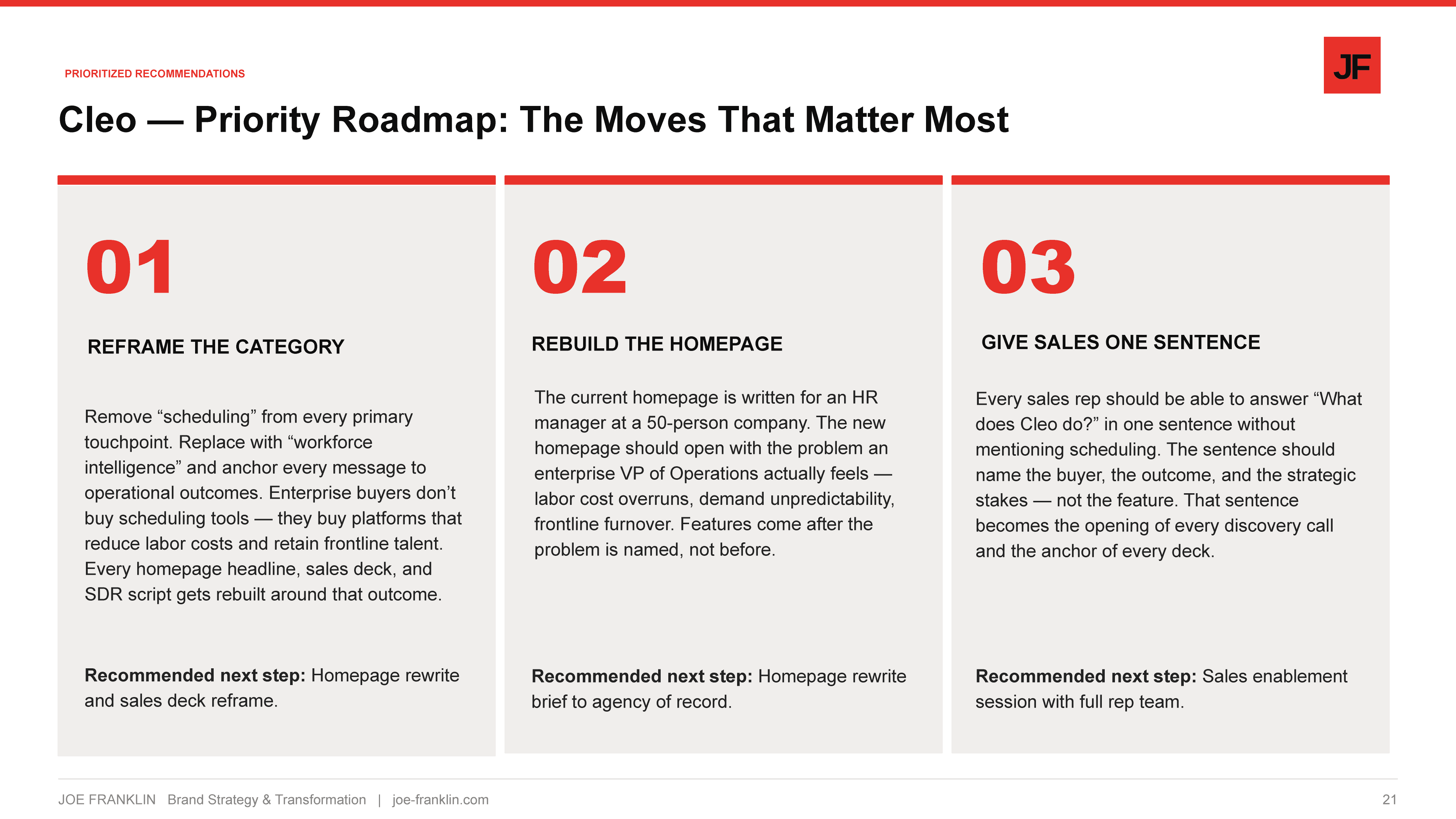
Priority Roadmap — The three moves most likely to close the narrative gap and protect valuation.
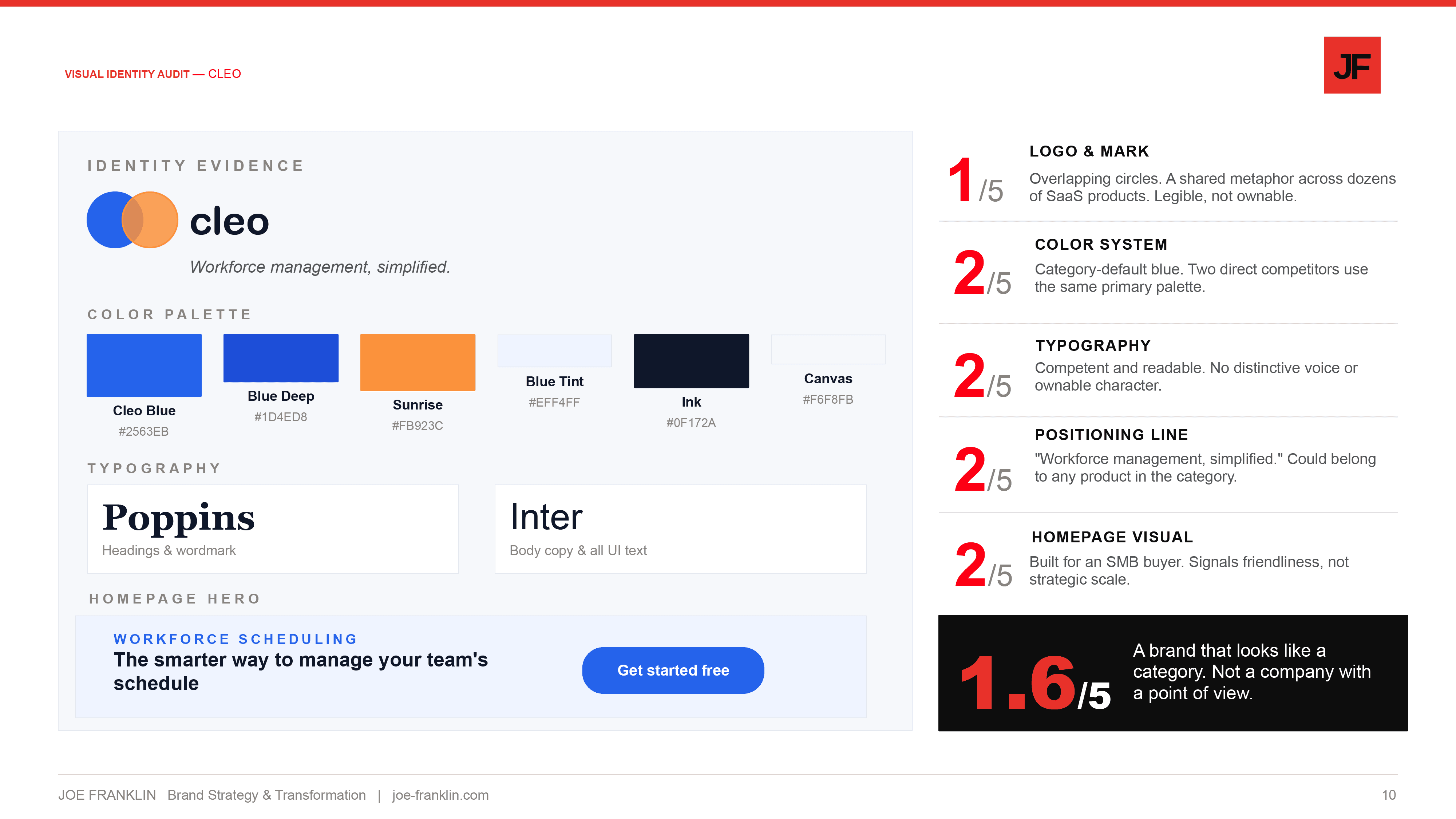
Visual Identity Audit — A scored evaluation of how a portfolio company's brand is showing up in the market.
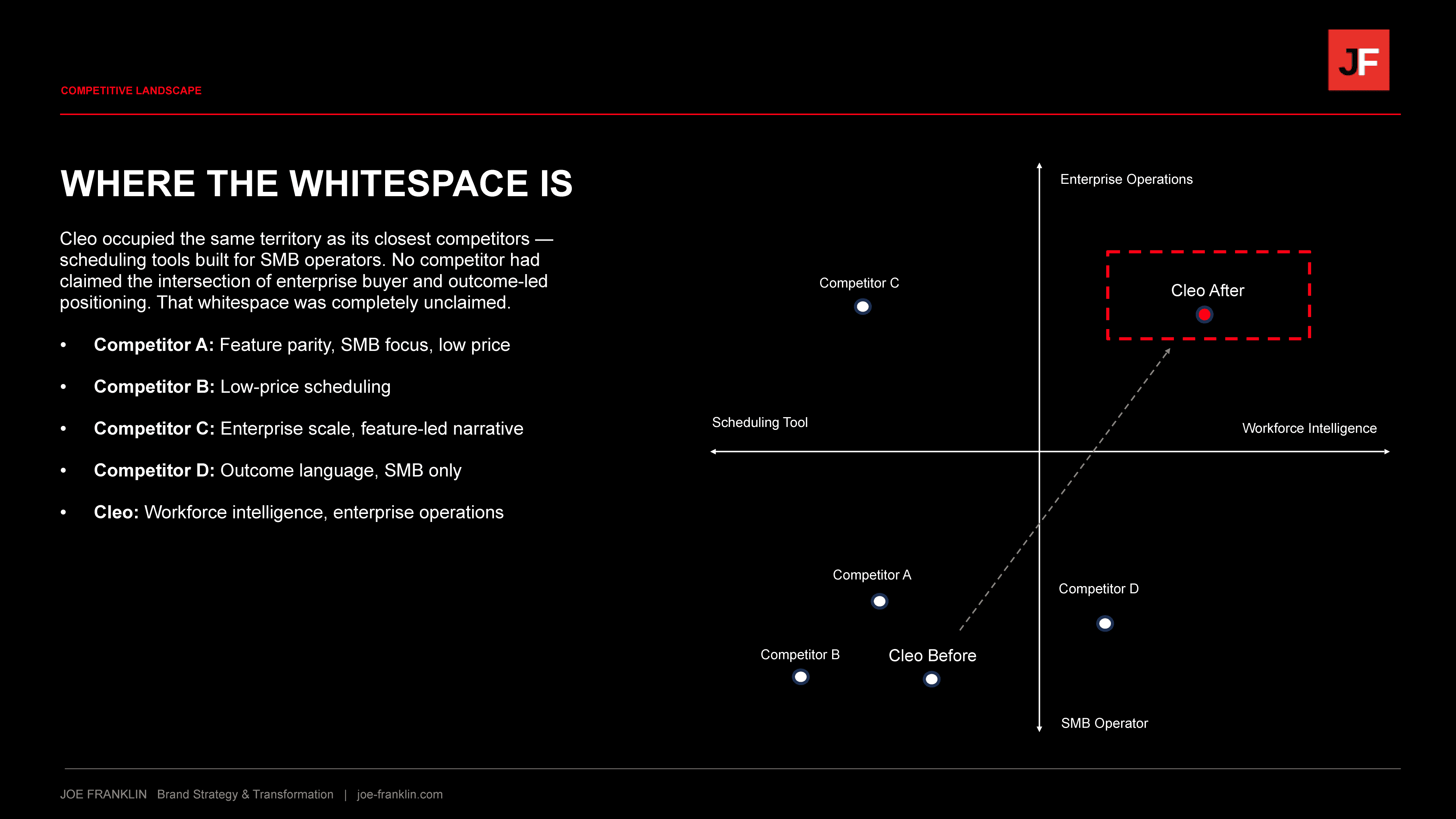
Competitive Whitespace Map — Where the company sits relative to its competitors, and the unclaimed territory available before the next raise.
*All Identifying data has been masked to protect client privacy.
WHAT CLARITY CHANGES
The pitch lands in the first five minutes instead of the last five. The sales cycle shortens because buyers arrive pre-convinced rather than skeptical. The fundraising narrative holds up under partner scrutiny because the category story is clear and credible.
Recruiting improves because the best candidates can see where the company is going. Marketing spend works harder because it's amplifying something true rather than compensating for something unclear.
And the valuation reflects the category leader potential — not just the revenue, but the story that makes the revenue inevitable.
That's what brand clarity does for a portfolio company. The Brand Truth Assessment finds it — fast, independently, before more capital gets deployed into the wrong fix.
BASED IN PUERTO RICO
A PRACTITIONER'S EYE. NO AGENCY LAYERS.
Most Puerto Rico VC fund managers don't have a portfolio problem. They have a perception problem. Their portfolio companies are building world-class technology, but mainland buyers and investors still underestimate what gets built here. That gap between reality and perception quietly kills valuations, slows deals, and weakens positioning across the portfolio. I built the Brand Truth Assessment to expose that gap, and help fund managers close it.

" width="254px"><path d="M 254 130.491 L 159.432 143.691 L 205.845 202.422 L 201.627 206.626 L 143.125 160.037 L 129.983 255 L 124.017 255 L 110.875 160.037 L 52.373 206.626 L 48.185 202.422 L 94.593 143.691 L 0 130.491 L 0 124.509 L 94.593 111.315 L 48.185 52.584 L 52.373 48.349 L 110.875 94.938 L 124.017 0 L 129.983 0 L 143.125 94.938 L 201.627 48.349 L 205.845 52.584 L 159.432 111.315 L 254 124.509 Z" fill="rgb(232, 47, 43)" height="255px" id="EvCmx7UP9" width="254px"/></g></svg>)
